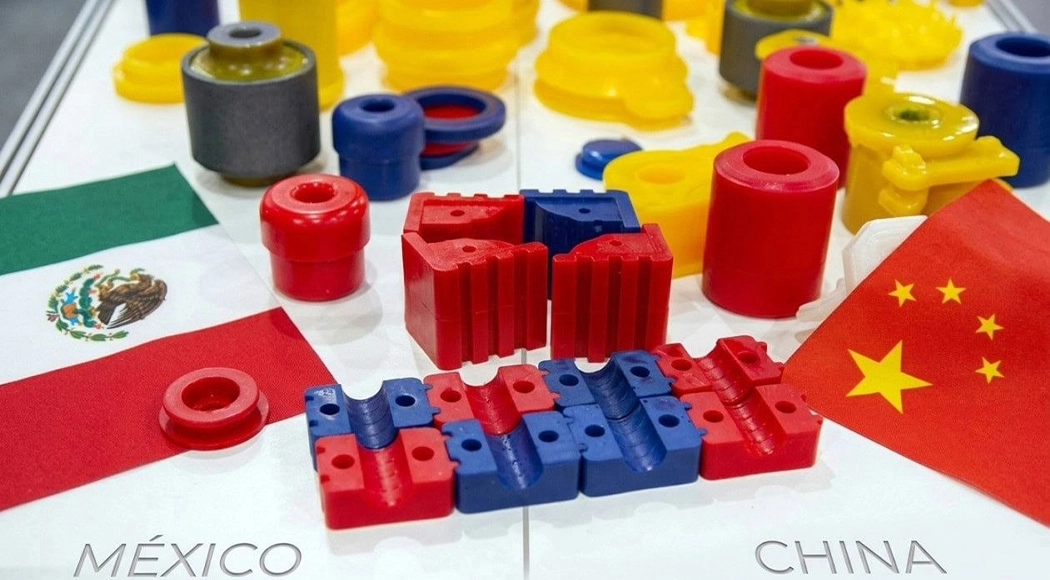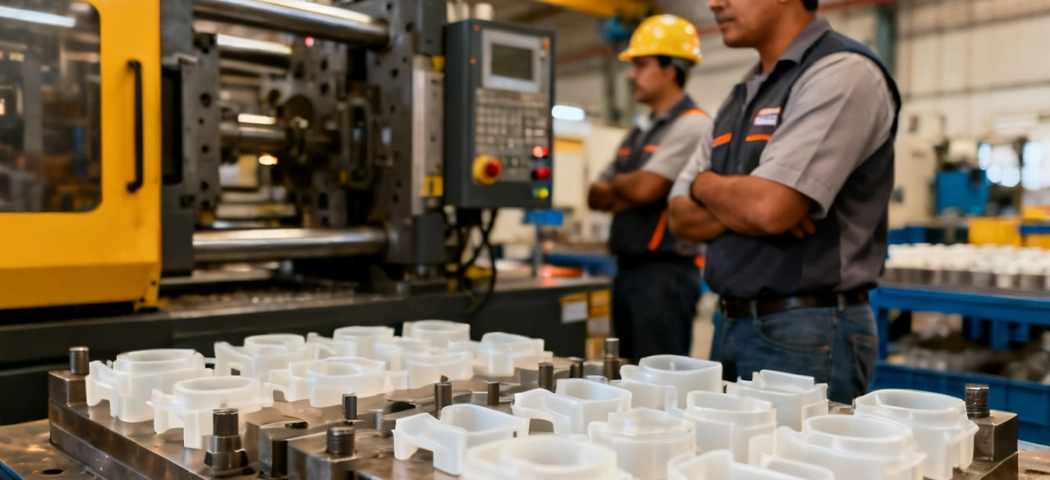
industrial companies in the United States looking to optimize their supply chain without sacrificing quality or responsiveness.
The growth of nearshoring, along with the pressure to reduce lead times and logistical risks, has positioned Mexico as a strategic hub for plastic manufacturing. This shift is not temporary. In practice, it reflects something deeper: the need for more predictable operations, closer to the end customer and less exposed to global disruptions.
That said, choosing a supplier is not a minor decision. Many companies approach it as a price comparison, but in reality, it defines the stability of the entire operation. A poorly selected supplier can lead to anything from recurring delays to quality issues that directly impact the end customer. What makes it more challenging is that these problems rarely appear at the beginning—they usually surface when volumes increase or the project becomes critical.
In this article, you’ll find a clear, practical guide to evaluating plastic injection molding suppliers in Mexico, understanding how they compare to Asia, and making a decision based on operational criteria—not just commercial considerations.
Why Are Companies Choosing Mexico for Plastic Injection Molding?
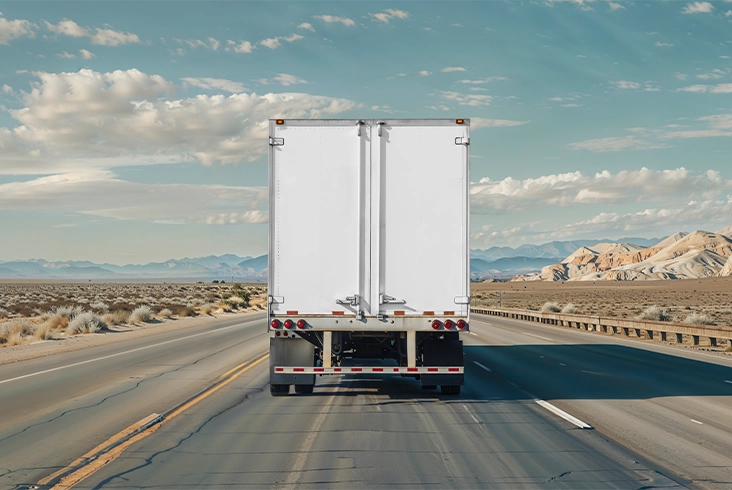
Mexico has become an increasingly logical option for plastic manufacturing, especially for U.S. companies that need greater control over their operations.
For years, decisions were driven almost exclusively by cost per part. Today, that has changed. Many companies have already experienced the limits of that approach: delays, lack of flexibility, or logistical challenges that ultimately cost more than the initial savings.
Key Factors Driving This Decision
Before evaluating suppliers, it’s worth understanding why Mexico is gaining ground:
- Geographic proximity to the U.S.
In practical terms, this means the ability to react quickly. Going from a 30–45 day wait to receiving product in less than a week completely changes how inventory and production are managed. - Reduced lead times
It’s not just about speed. It’s about the ability to adjust orders, correct deviations, and avoid overproduction. Many companies find that inventory savings more than offset any difference in unit cost. - Tariff advantages under USMCA
In practice, this simplifies operations and reduces uncertainty. It’s not just about tariffs—it’s about predictability. - Total cost optimization
It’s common to see projects where Asia appears cheaper on paper, but once transportation, inventory, and risk are factored in, Mexico proves more efficient. - Development of industrial hubs like Querétaro
This goes beyond location. It’s about access to skilled labor, suppliers, maintenance, and technical support.
What Does Manufacturing in Mexico Look Like in 2026?
Today, many U.S. companies are rethinking their sourcing strategies. A significant percentage are evaluating moving part of their production out of Asia.
This shift has raised the standard in Mexico. It’s no longer enough to “have machines.” Customers now expect robust processes, traceability, and compliance with international standards.
In practice, this has created a clear gap:
some suppliers are well-structured and scalable… while others struggle once projects grow.
Choosing the right supplier from the beginning helps avoid having to switch during critical stages.
Key Factors When Choosing a Plastic Injection Molding Company
Selecting among different plastic injection molding companies in Mexico requires more than reviewing a quote. It’s a technical and operational evaluation.
Many companies make the mistake of focusing on the initial price. The problem is that real costs appear later: adjustments, rejections, delays, or even switching suppliers.
1. Industry Experience
Not all parts are created equal.
A supplier with relevant experience has already dealt with similar challenges and knows how to avoid them. For example, in automotive, a defect can stop an entire production line. In medical, it can lead to regulatory rejection.
In practice, working with an inexperienced supplier often results in more testing, more errors, and longer timelines.
2. Technical Capabilities
This is where many suppliers fall short.
Capabilities such as overmolding, insert molding, or multi-component processes are not just added value—in many cases, they determine whether a design is viable.
Materials also matter. Not all suppliers properly handle engineering resins or high-precision components.
It’s common to see projects that start with a basic supplier and later migrate to a more capable one—at a higher cost.
3. Tooling Design and Manufacturing
Tooling is often where a project’s success or failure is defined.
A poorly designed mold may work… but with constant issues:
flash
warping
inefficient cycle times
Fixing a mold during production is usually far more expensive than designing it correctly from the start.
A strong supplier doesn’t just build the mold—they challenge the design and suggest improvements.
In practice, one of the stages where the most deviations occur is during mold development. Many companies treat it as an isolated process, when in reality it defines a large part of production performance.
For this reason, a more effective way to structure plastic injection molding projects is to work under a coordinated model from the very beginning:
- Design definition and validation
The part is analyzed based on how it will behave in production, not just its geometry. This makes it possible to anticipate filling issues, shrinkage, or inefficient cycle times before the mold is built. - Mold development with specialized suppliers in Asia
At this stage, Asia remains highly competitive in both cost and quality, largely due to government subsidies on steel and a high level of specialization in tooling.
The key difference lies in how the process is managed: working with validated suppliers under direct technical supervision helps reduce common risks such as dimensional deviations, rework, or lack of repeatability. - Production in Mexico with close operational control
Once the mold is validated, production in Mexico allows for faster response times, parameter adjustments, and consistent quality, especially in projects where demand may fluctuate.
This approach helps avoid one of the most common mistakes: separating design, tooling, and production without real coordination, which often leads to friction, delays, and cost overruns that are difficult to correct later.
4. Certifications and Quality Control
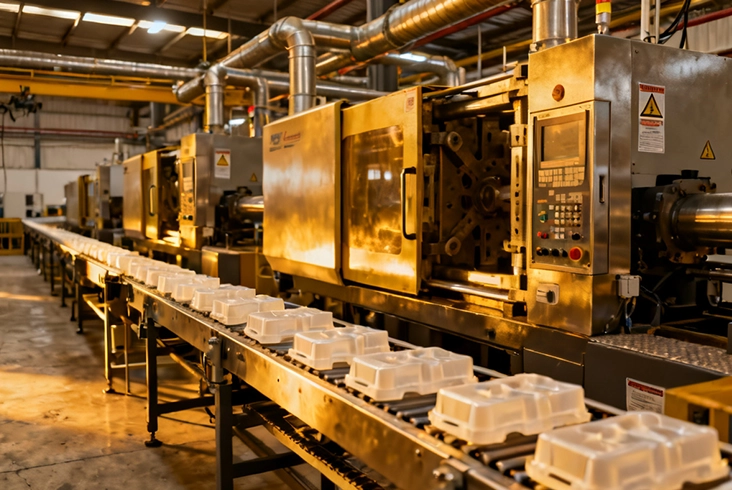
Certifications matter, but they’re not everything.
In practice, what truly matters is execution:
- Is there real batch traceability?
- Are critical variables monitored?
- Are deviations documented?
Many companies assume that having ISO certification is enough, only to face production issues because controls are not consistently applied.
5. Production Capacity and Scalability
A supplier may perform well at low volumes… and fail when demand increases.
It’s important to understand:
- how close they are to maximum capacity
- how quickly they can scale
- whether they rely heavily on labor or have automation
This factor is often overlooked early on but becomes critical during growth phases.
6. Strategic Location
This is not just about logistics—it’s about operational efficiency.
Regions like Querétaro offer real advantages in transportation, technical support, and talent availability.
This translates into fewer delays and faster response times when issues arise.
Common Mistakes When Choosing a Supplier
In practice, these mistakes happen repeatedly:
- Choosing based on price without understanding total cost
- Not validating mold design
- Assuming all suppliers have the same technical level
- Failing to evaluate communication and responsiveness
- Switching suppliers too late
The critical issue is that these mistakes rarely show up in the early stages. They surface once the project depends on the supplier.
Mexico vs. Other Countries (China and Asia)

Comparing Mexico with Asia requires understanding the full context—not just cost per part.
Each region has its place, but the decision depends on the type of project and the level of risk a company is willing to take.
| Factor | Mexico | China / Asia | Business Impact |
| Lead time | 2–7 days | 30–45 days | Lower inventory, greater control |
| Logistics costs | Low and stable | High and variable | Less uncertainty |
| Tariffs | 0% (USMCA) | Variable | Greater predictability |
| Flexibility | High | Medium-low | Faster adaptation |
| Communication | Direct | More complex | Fewer errors |
| Supply chain risk | Low | Medium-high | Greater stability |
In practice, many companies are shifting toward hybrid models, combining production in Mexico with specific capabilities in Asia.
Key Comparison for Decision-Making
Mexico stands out for speed, proximity, and flexibility. Asia remains relevant for high-volume projects where unit cost is critical.
The key is not choosing one over the other—but knowing when to use each.
Real Business Impact
Working with Asia often requires more planning and allows less margin for error. Any change can take weeks.
By contrast, Mexico enables faster adjustments, which in dynamic markets can make the difference between meeting demand or losing a customer.
Current Risks of Relying Solely on Asia
The global environment has shown that depending on a single region carries risks.
It’s common to encounter:
- unexpected delays
- changes in logistics costs
- communication challenges
This has led many companies to diversify.
What Is the Best Plastic Injection Manufacturing Strategy?
Every project is different.
In many cases, the most effective approach is to combine:
- Mexico for nearby, flexible production
- Taiwan for specialized components
This strategy allows optimization without compromising lead times or quality.
Advantages of Working with a Full-Service Supplier
Splitting suppliers may seem like a good idea at first, but in practice, it often creates friction.
A full-service supplier simplifies operations.
Key Benefits
- Single point of contact
Less confusion, fewer errors. - Lower operational costs
Eliminates duplication across suppliers. - Optimized timelines
Fewer reworks and adjustments. - Greater quality control
The entire process is aligned. - Strategic partners and suppliers
Drimo Plastics has the capability to manage the entire process from mold conception, working with trusted suppliers in Asia under direct technical supervision. This allows clients to leverage cost and specialization advantages without taking on the typical risks associated with offshore tooling.
Real Impact on Projects
It’s common to see projects where design, tooling, and production are handled separately. The problem appears when something doesn’t fit.
No one takes full responsibility.
With a full-service supplier, this changes. Problems are identified earlier and resolved faster.
Why Choose Drimo Plastics?
Choosing among different plastic injection molding companies in Mexico means finding a partner that truly understands how the full operation works.
Drimo Plastics combines technical expertise with a practical business mindset.
Key Differentiators
- Location in Querétaro
Direct access to one of the strongest industrial hubs in Mexico. - Manufacturing experience
More than 15 years working across different types of projects. - Technical capabilities
From tooling development to complex production. - Commitment to quality
Structured processes and a focus on consistency.
Key Advantage: Hybrid Mexico + Taiwan Model
Not all projects require the same approach.
Drimo allows you to work with:
- production in Mexico for speed and control
- support in Taiwan for complex components
This avoids having to choose between cost, quality, or lead time.
What Does Drimo Plastics Offer to U.S. Clients?
Beyond manufacturing, it provides operational stability:
- on-time delivery
- consistent communication
- process visibility
- adaptability
In practice, this reduces friction and makes supplier management easier.
Conclusion
Choosing among different plastic injection molding companies in Mexico is a decision that affects the entire operation.
Mexico offers clear advantages, but the final outcome depends on the supplier you choose.
In practice, the companies that achieve the best results are not those chasing the lowest initial cost, but those that select reliable partners with execution capability and a long-term perspective.