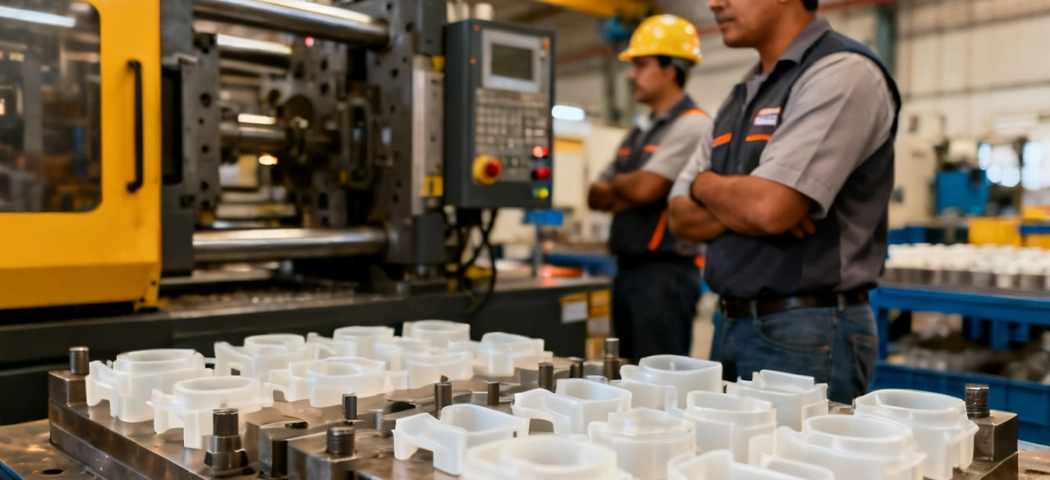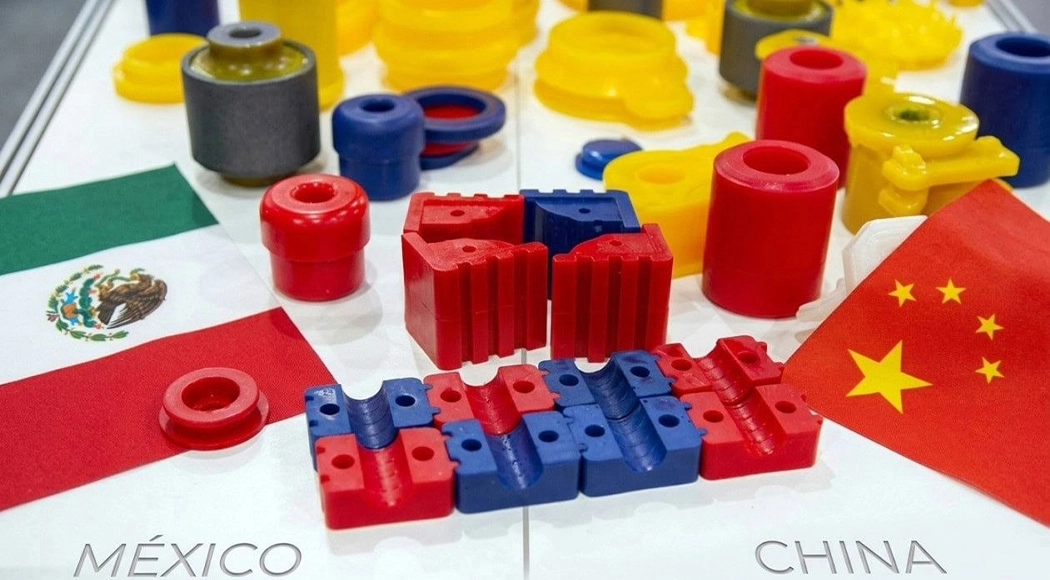
For more than two decades, many U.S. companies manufactured industrial components in Asia to reduce costs. China became the global manufacturing hub, and thousands of companies relocated the production of plastic parts, electronics, and automotive components there.
However, the global landscape has changed significantly in recent years. Trade tensions, new tariffs, and supply chain disruptions have forced many companies to rethink where they produce their components.
In this new scenario, Mexico has emerged as one of the most competitive alternatives for manufacturing injection-molded plastic parts for the U.S. market. Geographic proximity, tariff advantages, and industrial integration with North America are driving a major shift in sourcing strategies.
More and more U.S. manufacturers are discovering that producing in Mexico not only reduces logistical risks but can also improve total cost and delivery times.
The Global Shift: From Offshoring to Nearshoring
For years, the dominant model was offshoring—producing in distant countries with lower labor costs. China led this trend for decades.
Today, many companies are adopting nearshoring, which involves relocating production closer to the end market.
The main drivers include rising tariffs on Chinese goods and disruptions in global supply chains. In addition, higher logistics costs, the need for shorter lead times, and the desire for greater control over quality and intellectual property are influencing this transition.
This shift has strengthened industrial integration in North America, where Mexico has become the United States’ most important manufacturing partner.
Tariff Advantage: A Key Factor for Manufacturing in Mexico
One of the most influential factors in relocating manufacturing operations is the difference in tariffs applied by the United States depending on the country of origin.
Currently:
- Mexican exports face average tariffs of around 4%
- Imports from China exceed 30% on average and can reach 50% or more in some products due to trade measures such as Section 301
Additionally, the North American trade agreement allows many products manufactured in Mexico to enter the United States duty-free, provided they meet rules of origin requirements.
Relevant Changes Starting in 2026
Mexico has also implemented policies to strengthen its domestic industry. Since 2026, the country has applied tariffs ranging from 5% to 50% on certain inputs from countries without a trade agreement, such as China.
These measures aim to:
- Encourage regional production
- Reduce dependence on Asia
- Strengthen North American supply chains
For companies manufacturing plastic parts, this translates into more stable costs and greater predictability in the supply chain.
Operational Differences Between Manufacturing in Mexico and China
| Aspect | Mexico (USMCA) | China | Mexico Advantage |
| Average Tariff | 0% if compliant / ~4% average | 30%+ and up to 50% in some products | Significant tariff savings |
| Transit Time | 1–3 days | 25–60 days | Faster response and flexibility |
| Logistics Costs | Lower | Higher | More efficient transportation |
| Estimated Total Cost | Baseline | 15–40% higher | Greater competitiveness |
Logistics: The Hidden Cost of Manufacturing in Asia
Transportation is one of the most underestimated factors when evaluating plastic parts production.
Injection-molded parts typically occupy significant volume, are shipped in large quantities, and have relatively low weight. For this reason, logistics costs can represent a substantial portion of the final price when manufacturing in Asia.
These characteristics make ocean freight from Asia a major cost component.

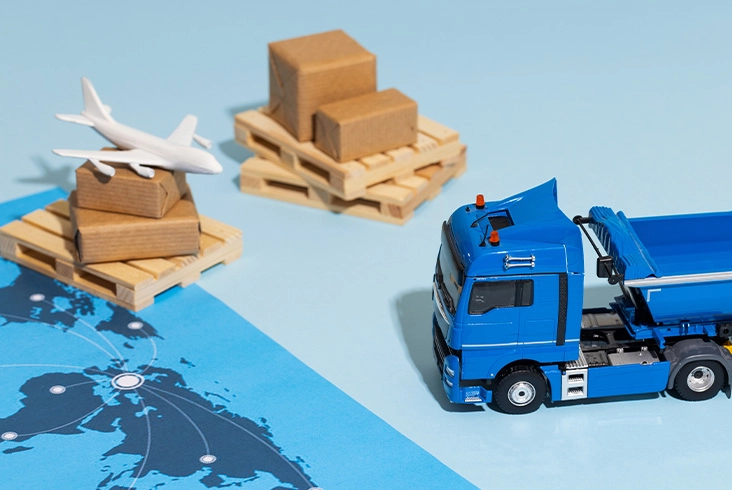
Transit Time Comparison
China to United States
25 to 60 days by ocean freight
Mexico to United States
1 to 3 days by ground transportation
Additionally, transportation costs from Mexico can be 20% to 40% lower than from China.
This allows companies to reduce inventory levels, respond more quickly to demand changes, and minimize production disruptions.
In industries where continuous supply is critical, this logistical advantage can be decisive.
Mexico as a Strategic Hub for Plastics Manufacturing
Mexico has a strong and growing industrial infrastructure, particularly in the plastics sector.
The country has developed major injection molding clusters that concentrate skilled talent, modern machinery, and specialized suppliers.
Some of the main industrial hubs include:
Querétaro
One of the fastest-growing advanced manufacturing ecosystems in Mexico, located in the heart of the Bajío industrial corridor.
- Strong presence of the automotive and aerospace industries
- Significant plastics and technical components manufacturing cluster
- Local capabilities for mold development, adjustment, and maintenance
- Strategic logistics location with efficient access to the U.S. market
Tijuana
A key manufacturing center on the northern border with strong integration into U.S. supply chains.
- Leadership in medical device manufacturing
- Production of electronics and precision components
- Immediate proximity to California and the tech market
Monterrey
One of the largest industrial hubs in North America and one of Mexico’s most established manufacturing centers.
- Broad industrial base in steel, appliances, and auto parts
- Presence of major manufacturing corporations
- Highly developed logistics and financial infrastructure
Within these clusters, companies offer:
- High-precision injection molding
- Mold manufacturing and maintenance
- Product engineering
- Large-scale production
Many manufacturers also operate under the IMMEX program, which allows the temporary import of resins, molds, and components duty-free for export purposes.
Beyond these hubs, Mexico also has other relevant regions for plastics and industrial manufacturing. Areas such as Guadalajara, the State of Mexico, San Luis Potosí, Puebla, and Ciudad Juárez host significant manufacturing operations integrated into North American supply chains.
This combination of industrial infrastructure, specialized talent, and trade advantages has positioned Mexico as an ideal platform for producing plastic parts for the North American market.
Benefits of Manufacturing Injection-Molded Plastic Parts in Mexico
For many U.S. companies, relocating production to Mexico offers clear advantages in cost, logistics, and operational control.
Lower Total Production Cost
While unit manufacturing costs may vary depending on the project, the total landed cost is often more competitive in Mexico.
This is due to the combination of:
- Lower tariffs
- More economical transportation
- Shorter logistics timelines
Depending on the type of part and production volume, total cost can be 15% to 40% lower than manufacturing in China.
Competitive Labor Costs
Labor costs also favor Mexico in many sectors.
Manufacturing averages:
- Mexico → approximately $4.90 per hour
- China → approximately $6.50 per hour
This contributes to improved competitiveness in large-scale production projects.
Faster Production Timelines
Proximity to the United States enables faster processes such as:
- Prototype development
- Mold testing
- Production adjustments
This is especially valuable for companies that require frequent design changes.
Improved Quality Control
Geographic proximity facilitates:
- Plant audits
- Technical reviews
- Project oversight
Companies can visit their suppliers within hours.
Greater Supply Chain Resilience
Producing closer to the end market reduces dependence on long maritime routes and improves supply stability.
Intellectual Property and Sustainability
Another increasingly important factor for companies is the protection of their designs and technologies.
In many cases, manufacturing in Mexico offers greater intellectual property security compared to some regions in Asia, where product copying has been a recurring concern.
The North American trade agreement also promotes stricter standards in areas such as:
- Patent protection
- Regulatory compliance
- Labor practices
- Environmental sustainability
Additionally, regional production reduces emissions associated with long-distance ocean shipping, helping companies meet their sustainability goals.
When It Makes More Sense to Manufacture in Mexico
Although each project must be evaluated individually, Mexico is often the best option in scenarios such as:
- Medium to high production volumes
- Bulky plastic parts
- Products with frequent design changes
- Companies requiring fast delivery to the U.S. market
In these cases, the combination of efficient logistics, tariff advantages, and geographic proximity can provide a significant competitive edge.
Mexico as a Strategic Manufacturing Platform in North America
The reorganization of global supply chains is prompting many U.S. companies to reconsider where they manufacture their industrial components.
In this new environment, Mexico is consolidating its position as one of the most competitive manufacturing platforms for the U.S. market, especially in sectors such as plastic injection molding.
Tariff advantages, industrial infrastructure, geographic proximity, and trade integration with the United States are driving more companies to rethink their production strategies.
For many U.S. businesses, manufacturing in Mexico not only reduces logistics and tariff costs but also improves responsiveness and supply chain stability.
Are You Considering Manufacturing Plastic Parts in Mexico?
At DrimoPlastics, we specialize in injection molding and work with U.S. companies looking to optimize their supply chains.
Our team can help you:
- Technically analyze your plastic parts
- Calculate total landed cost considering updated tariffs
- Compare scenarios between manufacturing in Mexico and China
- Design an efficient nearshoring strategy
If you are evaluating relocating your production or starting a new injection molding project, we can prepare a technical analysis tailored to your parts and production volumes.